health
Share
Every parent needs to know about these 11 common choking hazards
Published 20:00 21 Sept 2018 BST
Updated 12:45 19 Sept 2018 BST
 Add us as a preferred source on Google »
Choking is every parent's worst nightmare.
And yet no matter how careful we are, children, especially babies and young children, are curious by nature, and tend to put pretty much any object they come across into their mouths. For slightly older children, some food items provide a bigger choking hazard than others.
A gag reflex often protects children from choking, but because a child's windpipe (trachea) is narrow (about the size of a drinking straw's diameter) compared to that of an adult, choking remains a serious hazard.
What this means, of course, it that keeping small and toxic objects out of reach is essential, and being aware of what items pose a bigger choking hazard can actually save lives.
Here are ten items can prove a choking hazard every parent needs to be aware of:
1. Batteries
This especially refers to small lithium cell batteries (button batteries) that are often found in a variety of small household devices like TV remote controls, watches and even in some children's toys. If ingested, these can cause severe tissue damage and have fatal consequences within just two hours.
2. Balloons
They are the picture of happiness and joy, but in the US, balloons account for nearly half of all choking related incidents. When they pop, those tiny bits of latex are a serious choking hazard to infants and babies who might come across them and put them in their mouth.
 3. Grapes
There have been so many incidents of children choking because they ate a whole (or wrongly cut) grape. It is vital that round foods like grapes, strawberries, and small (cherry) tomatoes be cut in quarters until at least age three, and maybe even longer.
4. Coins and marbles
While older children most often know not to put coins in their mouth, these can still provide a serious hazard to younger babies. Marbles (and other similar toys) need to be kept well away from children under the ages of four, meaning parents with older children need to be vigilant to keep these away from the floor and any surface the baby is.
5. Blueberries
Although small, these can still pose a choking hazard. Cut them in half until your child is three.
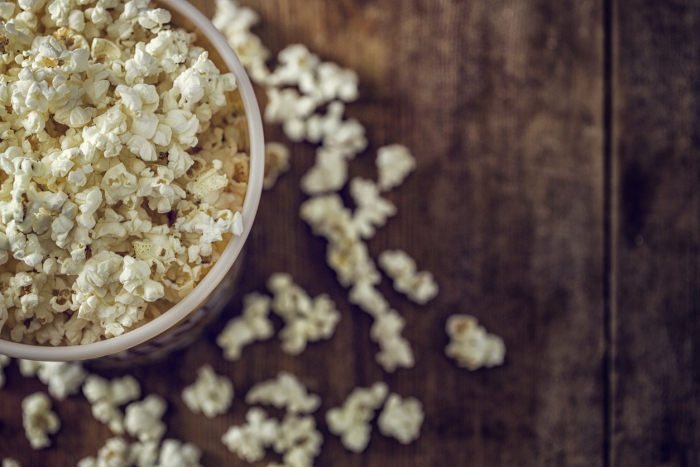
6. Popcorn
Unpopped kernels can pose a real choking hazard to young children.
3. Grapes
There have been so many incidents of children choking because they ate a whole (or wrongly cut) grape. It is vital that round foods like grapes, strawberries, and small (cherry) tomatoes be cut in quarters until at least age three, and maybe even longer.
4. Coins and marbles
While older children most often know not to put coins in their mouth, these can still provide a serious hazard to younger babies. Marbles (and other similar toys) need to be kept well away from children under the ages of four, meaning parents with older children need to be vigilant to keep these away from the floor and any surface the baby is.
5. Blueberries
Although small, these can still pose a choking hazard. Cut them in half until your child is three.
6. Popcorn
Unpopped kernels can pose a real choking hazard to young children.
 7. Hot dogs and sausages
Because of the cylindrical shape (meaning they can completely block a child's airways), hot dogs and sausages can be a serious choking hazard to children. Make a habit of cutting these into small pieces before serving to children under the age of four.
8 Lollipops and hard sweets
This one is almost a given, but important to keep in mind, none the less. Young babies and children under four should not have any hard sweets and certainly not lollipops.
9. Very sticky foods
To babies and very young children, sticky foods (like nut butters) can be hard to swallow, and this goes for things like raisins too, which can easily clump together in your child's mouth, posing a choking hazard.
10. Nuts and seeds
Round and hard foods pose the biggest risk when it comes to chilldren and choking, so nuts and seeds should be avoides until your child turns four.
11. Marshmallows and chewing gum (and jelly sweets)
Like with raisins and nut butter, marshmallow and chewing gum can get lodged in your child's throat and pose a choking risk.
7. Hot dogs and sausages
Because of the cylindrical shape (meaning they can completely block a child's airways), hot dogs and sausages can be a serious choking hazard to children. Make a habit of cutting these into small pieces before serving to children under the age of four.
8 Lollipops and hard sweets
This one is almost a given, but important to keep in mind, none the less. Young babies and children under four should not have any hard sweets and certainly not lollipops.
9. Very sticky foods
To babies and very young children, sticky foods (like nut butters) can be hard to swallow, and this goes for things like raisins too, which can easily clump together in your child's mouth, posing a choking hazard.
10. Nuts and seeds
Round and hard foods pose the biggest risk when it comes to chilldren and choking, so nuts and seeds should be avoides until your child turns four.
11. Marshmallows and chewing gum (and jelly sweets)
Like with raisins and nut butter, marshmallow and chewing gum can get lodged in your child's throat and pose a choking risk.
3. Grapes
There have been so many incidents of children choking because they ate a whole (or wrongly cut) grape. It is vital that round foods like grapes, strawberries, and small (cherry) tomatoes be cut in quarters until at least age three, and maybe even longer.
4. Coins and marbles
While older children most often know not to put coins in their mouth, these can still provide a serious hazard to younger babies. Marbles (and other similar toys) need to be kept well away from children under the ages of four, meaning parents with older children need to be vigilant to keep these away from the floor and any surface the baby is.
5. Blueberries
Although small, these can still pose a choking hazard. Cut them in half until your child is three.
6. Popcorn
Unpopped kernels can pose a real choking hazard to young children.
7. Hot dogs and sausages
Because of the cylindrical shape (meaning they can completely block a child's airways), hot dogs and sausages can be a serious choking hazard to children. Make a habit of cutting these into small pieces before serving to children under the age of four.
8 Lollipops and hard sweets
This one is almost a given, but important to keep in mind, none the less. Young babies and children under four should not have any hard sweets and certainly not lollipops.
9. Very sticky foods
To babies and very young children, sticky foods (like nut butters) can be hard to swallow, and this goes for things like raisins too, which can easily clump together in your child's mouth, posing a choking hazard.
10. Nuts and seeds
Round and hard foods pose the biggest risk when it comes to chilldren and choking, so nuts and seeds should be avoides until your child turns four.
11. Marshmallows and chewing gum (and jelly sweets)
Like with raisins and nut butter, marshmallow and chewing gum can get lodged in your child's throat and pose a choking risk.
Explore more on these topics: